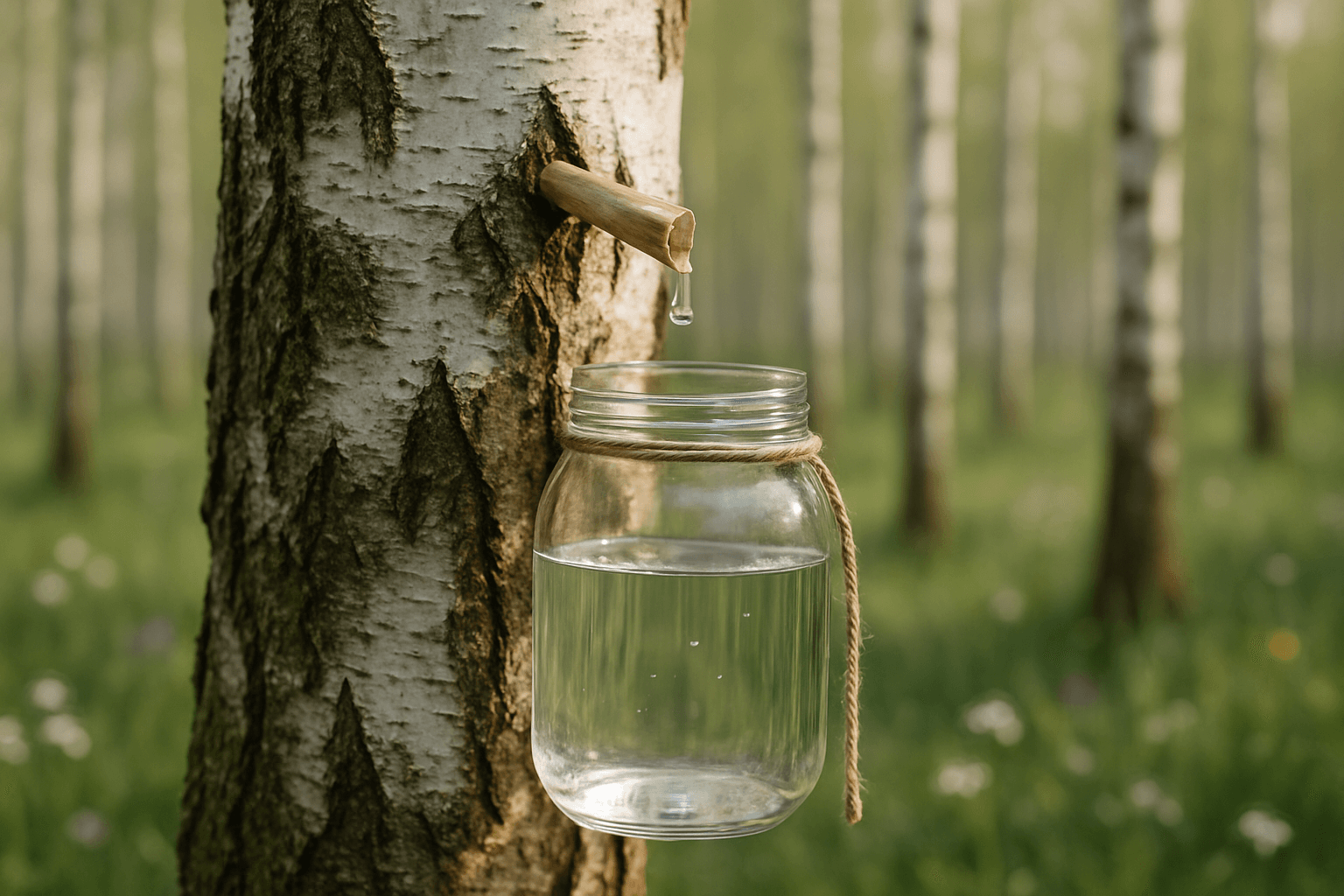
# Tree Sap as a Cosmetic Extraction Medium: From Cultural Symbol to Validated Active Ingredient
*By Dr. Hichem Henchiri, R&D Director and Co-Founder, Arboretum Ingredients*
---
Section
The Change That Changes Everything
Tree sap has always been present. For centuries, traditional communities have harvested sap from birch, maple, and pine, not only for nourishment or medicine but because they intuitively understood that sap carries the tree's most concentrated biochemical intelligence, its stress responses, healing compounds, and seasonal metabolites.
What has changed is not the sap, but our ability to exploit it accurately.
At Arboretum Ingredients, we have spent the past few years developing and validating a process, ULTRASEVUM, that uses plant sap as a phytosolvent for the ultrasonic extraction of cosmetic actives. This work has forced us to confront a question that the industry tends to avoid: when we talk about "natural extraction," what do we actually mean, and can we prove that it works?
---
Section
What Conventional Extraction Actually Destroys
The cosmetic industry has a measurement problem. Most suppliers report the final concentration of actives in a finished extract. Very few report what has been lost in the process.
Conventional solvent-based extraction, including hydroethanol, propylene glycol, and glycerin systems, typically involves temperatures between 40 °C and 80 °C maintained for several hours. For thermosensitive bioactives, polyphenols, certain peptides, and omega-rich fatty acid precursors, this is significant. Studies on botanical extraction have demonstrated degradation rates of 30% to 60% for thermosensitive compounds under standard industrial conditions.
Ultrasonic extraction at controlled frequencies, which is the basis of ULTRASEVUM, operates at room temperature. The cavitation mechanism mechanically disrupts plant cell walls, rather than thermally. This is important because it preserves the phytochemical profile that was actually present in the plant, rather than a heat-degraded approximation.
Our clinical validation on Linodermine, our active derived from flax seeds, demonstrated measurable improvements in skin hydration and elasticity in a controlled in vivo study, results we attribute in part to the preservation of intact polar lipids and lignan precursors that would be partially destroyed during conventional extraction.
---
Section
Market Implications: The End of Vague Green Claims
Consumers are not becoming more gullible. They are becoming more skeptical, and for good reason. A decade of "natural" claims that have never been defined, substantiated, or independently validated has created a credibility gap that affects the entire ingredient supply chain.
This creates a genuine strategic advantage for suppliers who can rigorously document their processes. Not because regulation currently requires it in every market, but because brands that will lead the next five years of premium natural cosmetics already demand it.
When we engaged in discussions with our distribution partners in Europe and Asia for our actives, the exchanges that progressed the fastest were those where we could immediately provide documentation of the extraction process, justification for COSMOS approval, and clinical data. The abstract story about sustainability was appreciated. Concrete data closed the deal.
The implication for tree sap as a category: suppliers who can demonstrate a complete chain of evidence, from sourcing to bioactivity, will be able to command significantly higher prices and benefit from long-term business relationships.
---
Section
Formulation Reality: What Works and What Complicates Things
Tree sap introduces real formulation complexity that suppliers often underestimate.
The phytochemical profile of sap varies by species, season, and geography. Birch sap harvested in Scandinavia in early spring has a different sugar and amino acid profile than the same species harvested six weeks later. This variability is not a failure of the process; it is a biological reality. The question is whether your supplier has implemented quality controls to manage it.
When we formulate Resiskin, our skin barrier strengthening active derived via ULTRASEVUM with plant sap as the extraction medium, each batch undergoes HPLC profiling to verify the consistency of key marker compounds. This is not optional for us. Without batch consistency, the clinical data we generated becomes meaningless for the formulator purchasing the ingredient six months after the study concludes.
For formulators incorporating actives derived from tree sap, three practical considerations are most important. First, the natural sugar content of sap-based extracts can influence the water activity of aqueous phase formulations, necessitating a review of the preservation strategy. Second, sap-derived actives tend to be intrinsically hydrophilic, limiting their use in anhydrous formats without additional encapsulation. Third, the potential for microbiological instability in raw sap means that a validated preservation or stabilization step in the supplier's process is non-negotiable, not just a nice-to-have.
---
Section
Claims Language: Precision Over Poetry
The regulatory landscape for natural cosmetic claims is converging toward a simple standard: if you say it, you must be able to measure it.
"Nourishing" is not a claim. It’s a narrative device. "Clinically demonstrated to increase skin hydration by X% after four weeks in a double-blind study" is a claim.
For tree sap-derived actives, the temptation is to rely on heritage language, and heritage does hold genuine marketing value. Consumers respond to authenticity and origin stories. But the mistake lies in substituting the story for data.
At Arboretum, our approach is to start with the clinical outcome, then connect it to the extraction story. Linodermine improves skin hydration and reduces the appearance of fine lines. The fact that it is extracted from organic flax seeds grown in Normandy using sap as a natural phytosolvent is why: cleaner extraction preserves more of the active fraction. This sequence matters. The story supports the data; the data do not need a story to be true, but the story makes the data memorable.
---
Section
Extraction Documentation as a Defensible Competitive Advantage
In a market where every supplier claims "sustainable" and "natural," extraction documentation becomes a significant differentiator precisely because most suppliers cannot produce it.
What does rigorous documentation look like in practice: a flowchart of the process with defined temperature ranges and the identity of solvents at each stage; COSMOS or equivalent certification of the extraction method by a third party; batch records with analytical data for key marker compounds; supply chain documentation for the raw material, including pesticide residue testing; and stability data for the finished extract under real storage conditions.
ULTRASEVUM holds patent WO2024228126, meaning that the extraction process is not only documented but also independently validated to the degree required for patent review. For our partners and distribution network, this provides a level of process transparency that is becoming increasingly rare in the ingredient space.
For brands evaluating suppliers: ask for actual extraction documentation, not the marketing summary. Suppliers who hesitate to provide it are telling you something important.
---
In summary
Strategic Takeaway
The emergence of tree sap as a credible extraction medium is not a trend. It is the result of several simultaneous pressures converging: consumer demand for transparency, formulators' interest in high bioavailability actives, and regulatory movement toward substantiated claims.
The opportunity for brands and formulators is real, but it requires working with suppliers who have done the scientific work, not just the storytelling. Select partners capable of providing clinical data for each active, documented extraction processes, third-party certification, and batch consistency data.
For the ingredient industry, the message is equally direct: the era of unsupported heritage narratives is coming to an end. Companies that have invested in rigorous science are building entry barriers that will be difficult to overcome.
Arboretum Ingredients is one of those companies. We built ULTRASEVUM because we wanted to offer something that could be fully explained and fully verified, from the plant in the field to the clinical outcome on the skin.
This is what tree sap makes possible when treated with the scientific seriousness it deserves.
---
*Dr. Hichem Henchiri is R&D Director and Co-Founder of Arboretum Ingredients SAS, based in Évreux, Normandy, France. Arboretum develops COSMOS-approved cosmetic active ingredients using the patented ultrasonic extraction process ULTRASEVUM.